Popular Posts

Total Pageviews

WELCOME!

Welcome to the DebiLyn Smith blog site. If you like what you read here, check out her website at www.debilynsmith.com

Thursday, June 19, 2014

Bone Density Scan IS for Wimps

Something new everyone. I was sent for a bone density scan last week.
The best news is it didn't hurt! There was no pain, no blood drawn, no contortoning  my limbs into pretzel positions. 

Being sent for a bone density scan can be as easy as going to the salon. Probably easier.

For me, getting to Prince George, a 3.5 hour drive down the highway, for the date I was given was the biggest issue. But here in the mighty north we have a solution called the Northern Health bus, where for the meager price of $10 one way, I was picked up, suitcase in hand, by the driver of a very large bus, complete with total wheel chair accessibility and gaped seating space and washroom, and left to sit back and enjoy someone else's driving down the highway.(www.northernhealth.ca or 1-888-647-4997)

What pleasure! I sat far enough back in the bus to not notice what was happening between the driver and the road. I pulled out my book, snuggled in and lost myself to someone else's world for a bit. A quick stop for another passenger (that made three of us) in Vanderhoof and we continued along, arriving in P.G. well ahead of the estimated four hour journey.

With the bus getting in at 7 pm, I had to overnight to make my appointment the following day at 11 am. This might be an issue with some, but there are hotels/motels in PG that will give you a medical discount for the asking.. And there's always the new Canadian Cancer Society's Kordyban Lodge that will take cancer related guests for $45 a night and non cancer related guests for $55 a night, three meals included.(Call them for info and reservations at 250-562-3535)
I was fortunate to stay with family overnight.

So, refreshed and full from an amazing power shake my sister-in-law  made, I arrived at the University Hospital of Northern BC. A volunteer in a pink jacket pointed upstairs, explaining the X Ray department was that way and down the corridor.
I arrived at the X Ray department and took a number where once called, I was checked-in and handed a form to give up at my next stop which was further down the same hallway.

Because I had a zipper in my pants, I was given a pair of flannel shorts to change into before being ushered into a darkened, small bedroom-sized exam room. I sat on the paper-lined stretcher/bed and answered questions about whether I had abstained from consuming extra calcium tablets before this exam as I'd been told.

I was then weighed and measured for height, an important step as you will soon see.

After lying down on the padded slab, a large cloth-covered box was placed beneath my knees, probably to force my spine further into the slab? A large white curved-headed machine came to life and like a scanner on a printer, it whirred as it moved slowly along the direction of my torso from my knees to my belly button. The head itself was a good foot and a half away from my body. No enclosure like in an MRI or something surrounding you like in a CT scan.
The process was repeated with the box removed and my legs lying flat in a divider to space my legs a certain distance apart. 

Easy, peasie, possibly more so because this was my second bone density scan. I had one two years ago to set "a marker" or a base for doctors to go by while I am on the cancer adjuvant therapy Letrazole. Letrazole is an anti-estrogen pill that can mess with your chances of osteoporosis and should be monitored for this.
I took a minute to discuss what the tech immediately could see from the results on her computer screen. A four cm change in my height kind of shocked me a bit.  I am no longer the 5'7 I have bragged about. I am a shorter 5'6 and change and going down. When did that happen?

This illustration shows gradual progression of bone density deterioration after the age of 35.


When you're about 30-35 the tech told me, you have reached maximum height and you will start to decline (or something like that...I don't quote well). According to emedicinehealth.com, " After age 30, bone resorption slowly begins to exceed new bone formation. This leads to bone loss. Bone loss in women occurs fastest in the first few years after menopause, but bone loss continues into old age. Factors that can contribute to bone loss include having a diet low in calcium, not exercising, smoking, and taking certain medications such as corticosteroids. Corticosteroids are medications prescribed for a wide range of diseases, including arthritis, asthma, inflammatory bowel disease, lupus, and other diseases. Corticosteroids may cause osteoporosis when used chronically.

So when I turned 40 and then 50 there was more to complain about than just memory, hearing and energy loss. I am the Shrinking Woman. Now what would be the positive spin for this?All I can think of is losing my hard earned privilege of riding the bumper cars at the Fall Fair. You have to be taller than the sign to get on!
Positive. Positive. Give me a minute, I'm still thinking...
Nope, maybe YOU can tell me what is positive about getting smaller? Alice in Wonderland found it handy. Surely we can too?

Tuesday, June 10, 2014

Post Breast Recon Update

It has been a year since my breast reconstruction surgery in Prince George. One year of a full cup on both sides of my brassiere. Over 365 days of looking at the normalcy beneath my shirt. Cancer took half of my breast away as the surgeon had to remove not only the tumor but enough around the tumor to try and get any spread tentacles or wisps of cancerous tissue.And now I have it back!

I have been on the post cancer treatment drugs of Tamoxifen and now Letrizole for three years now and I must tell you that the intensity of the hot flashes and the aching joints DOES wane. Either that or I don't notice them as much? No, I am sure they are less frequent and less intense. I also know what brings them on, like drinking hot beverages, red wine, spicy foods and stress. So sometimes I know when I am going to get one but do it to myself anyways. Sometimes it's worth it.

A hot flash acts like a choke collar for me. If my temper starts to rise, my heart speeds up, my face goes purple and water descends down from arm pits, my back, my neck, my brow. The act of trying to cool myself down before brain matter is boiled always defuses the stressful situation. At that moment I only want to survive the heat. Thank good ness my children have grown up. Now if I could get my husband to do things more my way, we could lessen the fanning.

But back to the boobs! My recon started with an expander on my right side to make room for the permanent silicone bag that would fill out my chest to past measurements. The left side was surgically gathered and raised, reducing it's size only marginally to resemble the right one. My scars have healed around the left nipple, cut so close to the darker brown line as to be almost invisible. All that remains is a slight pink line beneath the breast from the nipple to the chest.Two inches. It's nothing! The right side looks like I have a bruise which will possibly fade with more time.

The side of my chest where the lymph node surgery was done is still tight and felt with every movement of my right arm.It doesn't stop me from using it, especially where there is good food involved.I don't jig for halibut anymore though.

To sum things up, if you are sitting on the fence about whether or not to endure yet another surgery, I highly recommend you think about how wonderful it would feel to thumb your nose at your cancer and say, Ha! You didn't ruin MY life. I got my body back, better than ever. I have before and after pictures that are amazing! We're talking about changing zucchinis to grapefruits again.

 Breast recon isn't for everyone. For me,  it made a huge difference in my morale, self-confidence, and determination to keep the newly adjusted ones from ever getting operated on again.

Methods are changing for the better. There is less downtime, better results.Check into it. You can always decide NOT to do it once you hear all the facts.It's your body and your time.

 Please send me a note if you want to know more about my experience with this.

Monday, June 9, 2014

Relaying With Relish

 The Smithers Relay For Life was held on Saturday, June 7th at the Chandler School outdoor track. It started as a sunny morning  with volunteers popping in, coffees in hand to don their orange t-shirts marking them as organizers. Within minutes we were welcomed and put to work. We covered tables for the luncheon, set up tents and chairs, helped unload sound equipment, placed parking and no parking and team signs around.
We decorated and spread shirts across the Survivor Registration and  greeting station where people who have been through or are going through cancer get their special yellow shirts. They are encouraged to draw the outline of their hand on a banner, inside of which they will put how many years they have been cancer free and their name. The banner will later be walked around the track carried by and followed by the survivors. It's a powerful moment as people clap and cheer as we walk .

The first time I joined the survivors, I found this unnerving but now I receive it with honour as I know I am doing what I can to help others prevent a tangle with cancer.  Hugs and applause are always welcome in my life.

After a quick bite of fruit and vegis, I set-up and manned the Prevention Table where I talked to people about the ten tips I promote on lessening  cancer lottery tickets. I had samples of products one can reach for to lessen toxins, to use inside and outside their bodies to hopefully discourage a cancer growth. Things like vitamin D supplements, anti-oxidants like blueberries and ground flax seeds, using good oils instead of animal fats.

There were speeches from people going through their cancers and ones from people who have been out the other end. Stories of hope and loss, of optimism and of things the Canadian Cancer Society are currently funding in the way of research. Like: killing cancer cells with designer viruses and tracking prostate cancer with a protein biomarker, mapping the obesity problem, improving PET (positron emission technology) images among many, many others. (re: Top Canadian Cancer Society research stories of 2013)

There were head shavings on-site by people wanting to support others that are bald from cancer treatments. An anti " flavoured tobacco" petition was circulated and radon detector talks and draw. There was great music by local bands, local health food available and the sale of the luminaries: white flame-proof bags decorated in memory of cancer fighters present and past. A scoop of sand and a tea light candle are inserted in the bags which will line the track in the later hours. When they are lit, we walk the track in silence, thinking of these people.
The following is an excerpt from the end part of my luminary speech :

Tonight we light luminaries for those who's lights have gone out. We rekindle their memory with our flames and give them a moment of our silence. But we should also give these people our promise. That we will start looking after ourselves much better in their honour. Let them know that their passing from cancer has taught us a valuable lesson. That we will try harder to stay alive. To not take good health for granted.And that we will set a better example for those coming up behind us. For our children and the survivors of the future. So please think about this as you walk this last lap around the track in honour of those lights who are once again shining. The candles last mere minutes but our missing loved ones and the names of those currently fighting will live on forever in our hearts.

The moment was once again so emotional for me that I might have mentioned I will do what I can to get Houston relaying again in the summer of 2015.


It's never too late to give to the Canadian Cancer Society who does so many great things for anyone dealing with this disease. See their website at  www.canadiancancersociety.ca.

Friday, May 23, 2014

FREE ORGANIC FOOD! JUST BEND OVER...

Spring is in the air, as the song goes, but its also in the ground amidst the trees and the stinging nettles, the  trillium, phlox, trout lily, Dutchman's breeches, violets and many more wildflowers that the warmed ground starts to pop forth.
It's the beginning of the growth cycle which starts the filling of our freezer with our own harvested organic food, fresh from local forests. Like an Easter egg hunt, it's fun, great exercise and other than your time and possibly gas for your vehicle, it's free food for your fridge and freezer.


What am I talking about? Fiddleheads and morel mushrooms, of course. 


In Canada's coastal provinces such as  New Brunswick and Nova Scotia to the Pacific Coast of British Columbia, Mother's Day signals it's time to start checking any flooded areas for the first signs of a non-flowering wild fern called fiddleheads. These natural perennial and delicious vegetables grow up from the ground as spores rather than from seeds and boast about 10,000 variations. 

WHAT DO THEY TASTE LIKE?   With the outer part being firm and green, a fiddlehead at first bite tastes like asparagus, but then the inside has a softer leafy fern, so you will notice a following consistency of broccoli tops. Excellent when cooked, drained and tossed with a bit of lemon or vinegar. Pre-boil, rinse well and use in other dishes like casseroles, soups and stir-frys. Endless uses for this spring-must that is higher in anti-oxidants than blueberries!

WHAT DO I LOOK FOR? As they rise from their base or their "clump" fiddleheads are tightly coiled, closely resembling the ends of a fiddle. With the type that is best to eat, both sides of the coiled fern have a covering of light, rusty brown rice-paper (NOT black) like skin that as the fern uncurls, falls off. It is rumoured that hummingbirds like to use this dried fabric as lining for their nests. 

NOW WHAT DO I DO?When picking, we take the time to flick the exterior red fluff off before putting the fiddlehead in our bucket as it makes for much easier cleaning when the day is done.
 Once thoroughly rinsed at least three times in cold running water to separate any leftover fluff from the greens, fiddleheads must be boiled in a pot of water(to get them clean enough to eat) for at least three to fifteen minutes, depending on your taste for crunchy or soft vegetables. Rinse well before eating.


 After the stalk reaches a certain height, fiddleheads begin to uncurl, eventually standing straight and full, pretty when placed on the table as part of a floral arrangement but too bitter to eat.
It is the tightly coiled fronds that you want to pick for eating.  It is best to pick them before their stalks are barely out of the earth. That way they will be nice and firm and will keep for weeks in the fridge.


WHAT IS A MOREL MUSHROOM?


Morels are a wild mushroom that pop their heads out of the loamy earth only in the early spring. Although most species of mushrooms are found in very distinct habitats, the morel can be found in forests of spruce, cottonwood, Douglas fir, maple, beech or poplar trees. They can be found singly or even better, in large groups (it's like winning the lottery when you find the odd big patch).

BUT WHERE ARE THEY???

 Black morels (which appear first) tend to be more exclusively in hardwood forests, but not around any particular type of tree. Finding them is often like a connect-the-dots game. When you find one, be still and look nearby. When the spores that created the morel you just picked were jettisoned years ago, there likely was a wind pattern that blew the spores in a particular path. There may have been a nutrient source or environment (soil type, moisture, pH, etc.) that was conducive for growth. Look for the patterns.

Morels are particularly fond of areas that have burned the previous year. They seem to prefer soil that has been saturated from floods, snowmelts, swamps and rain so wear waterproof rubber or hiking boots when you go.

You can find the black, yellow and grey morel mushrooms growing near logs, under decomposing leaves, under dying elm trees, ash trees, popular trees, pine trees, or in old apple orchards

WHAT SHOULD I LOOK FOR?

.Not only is it the best-tasting mushroom, the morel is also the easiest to identify and safest to eat of all wild mushrooms. Generally, if you find a sponge-like protuberance, 1 to 6 inches tall pushing skyward among fallen forest leaves and grasses on spring days between 60 and 80 degrees, you're in luck. The stems and caps of morels are hollow, and the stem is attached at the base of the cap. It makes a great first mushroom to learn because its spongy shape is so distinctive and easy to identify. If you cut the morel open, it should be completely HOLLOW. If it's not do NOT eat it. And remember, any wild mushrooms MUST BE COOKED BEFORE EATING.


Tuesday, May 13, 2014

Support The Smithers Relay 2014

Come one, come all.

It doesn't matter that Houston won't be hosting a Cancer Relay this year. I am counting on the fact that Houston still wants to support the Canadian Cancer Society because cancer doesn't stop for anyone or anything.

This year an expected 30,000 PLUS BC people will go down this terrifying road. How did we get to the day when those kinds of numbers started? And more important, what can we do to get that number down?

We obviously need to learn more about what promotes cancer to grow and take off with your life. We need to educate everyone on the simple ways that they can help themselves to lessen their chance of getting cancers and we need more research into how to stop cancer for good. All of that takes money.

We have come a long way from the days of bloodletting to cure ailments. We now know how dangerous smoking and second-hand smoke is. How pesticides and toxins in our beauty products and in the foods we eat and the air and water can harm us. Studies have shown that indoor tanning before the age of 35 raises the risk of melanoma by 75 per cent! Who knew that ten years ago?

If you do get diagnosed with cancer, the CCS is  there for you almost instantly. You are supplied with a wealth of pamphlets, numbers to call, people to see to get you through. Dietitians, physio therapists, support groups,mental therapy. It's all available. You're in good hands. But again: it takes money to pay for this spectacular world of assistance. That money comes from these important fundraisers, the largest being the Relay for Life.

Get your friends together and get a team started. Let's make Houston a presence at the Smithers Relay this June 7 from 10-10 at the (previous) Chandler School outdoor field. A fabulous view of the mountain tops, close to downtown, walking distance to Safeway for lattes and grapes.

This year's focus is petitioning for the ban of Flavoured Tobacco. And promoting your ONE THING you will vow to do to become more pro-active about your cancer prevention.


If you have any questions, please get in touch with me at contact@debilynsmith.com. Thanks everyone.


.


Tuesday, April 29, 2014

Will You CHOOSE to get CANCER?

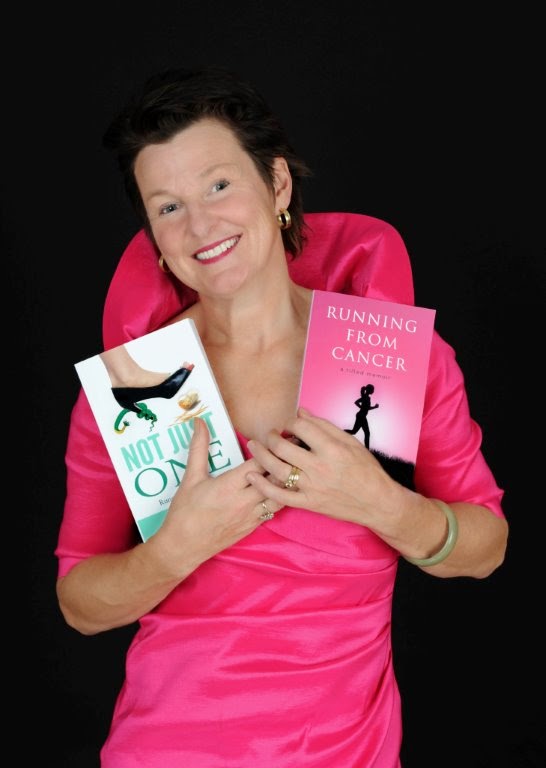
I don't know how better to say it? I wrote a book about my death defying  experience with breast cancer, terrified that someone else I knew was headed down the Cancer Freeway. But it's still happening. Another one, then another. It's like the cancer boulder is gaining momentum and it's flattening everyone in it's path. 


It was four years ago when I was cancer-naive. Yes, there are still people out there that know nothing about how cancer works; about what you can do to up your chances of avoiding the disease.

The Canadian Cancer Society recognizes that almost 50 % of new cancer diagnosis are caused by
 lifestyle.

And what is YOUR lifestyle like? If you're maintaining a healthy body weight by getting lots of exercise, eating well with lots of fruits and vegetables, drinking good water instead of too much alcohol or sugary options and have lessened your toxins, number one by  becoming a non-smoker or avoiding second-hand smoke, then you have GREATLY REDUCED your chance of winning that cancer lottery!

Add 1000 mg minimum of Vitamin D supplements, boost your immune system with weapons like organic blueberries, ground flax seed, decaf green tea, kale and other green  leafy vegetables and take up a stress release like Yoga, swimming, meditation or getting enough sleep and you're even MORE protected from that devastating tap on the shoulder that says, "You're next."

Trust me. You do NOT want to end up with the Frankenstein body parts. You do NOT want to experience a day with chemo chemicals rattling around your brain, you do NOT want to lay half-naked on a steel slab while a stranger lines up the blue tattoo on your breast with the radiation co-ordinates. You will regret having to spend the rest of your life worrying cancer will return.

You have alternatives.You can shape up your life right now. Tighten that anti-cancer belt even more.

If you are of the 30% who are pre-disposed to getting cancer, you have the advantage of keeping your thumb on any possible run-aways, until its detection. That's where a regular check-up with your family doctor comes in.And a tumour that only had the chance to grow to 1 cm has a much better chance of being survived than one that is 4cm.

Is it sinking in yet? Or will you continue to sink?

I chose to swim instead of sink because I'm not going down again without a better fight. This time, one in my favour.
Pass the brocolli please.